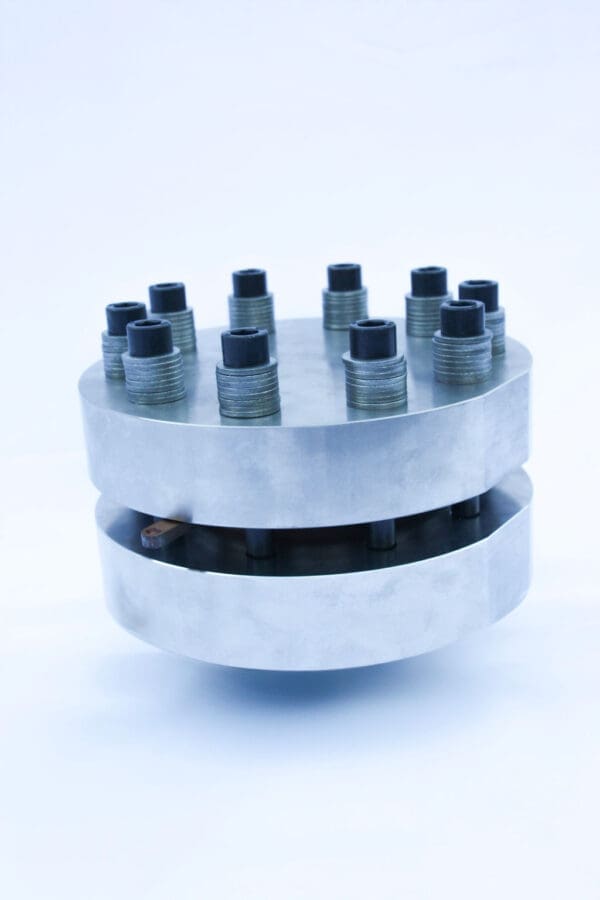
Electrochemical hydrogen compression is a technique in which hydrogen molecules are reduced into protons, transported through the membrane due to the potential difference and oxydized into hydrogen molecules again.

Figure 1: Schematic overview of electrochemical hydrogen compression
Well at least that is the short explanation of the process, but there is plenty more to be added to it.
Nernst equation
The principle behind electrochemical hydrogen compression (EHC) is the Nernst equation, which is derived from Gibbs free energy. Gibbs free energy tells us that
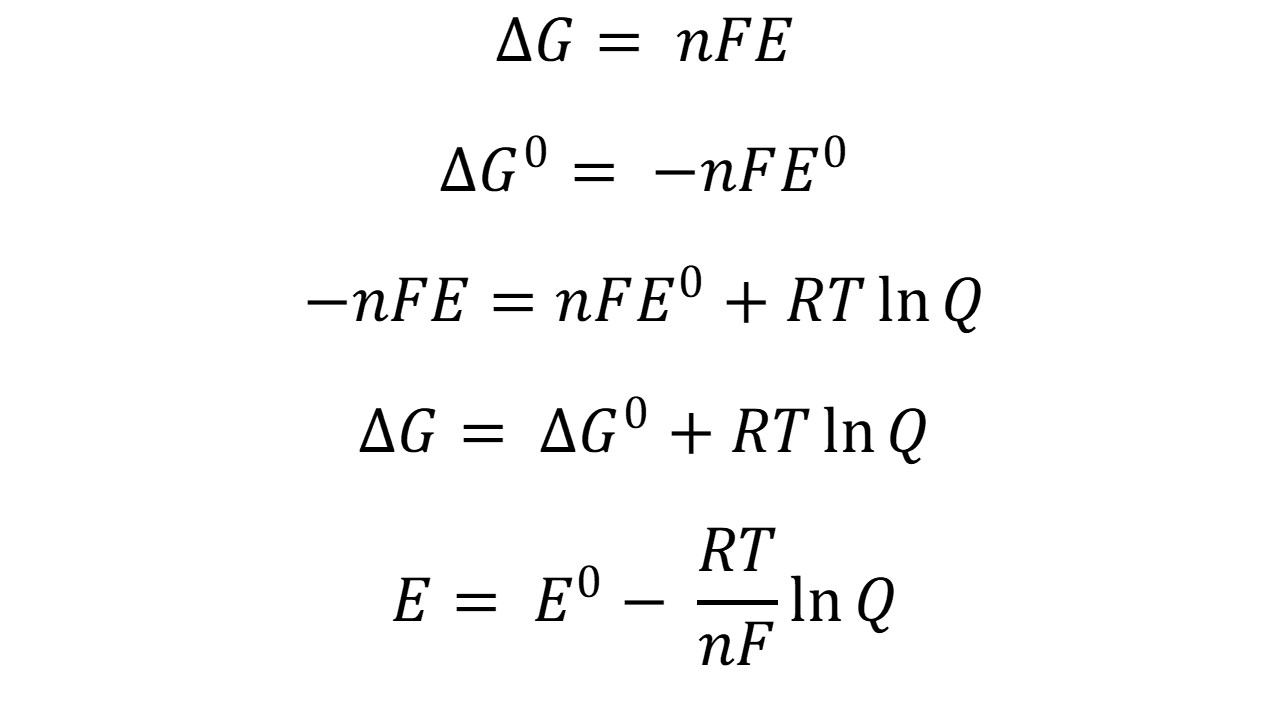
Figure 2: Nernst equation derived from Gibbs free energy
- n = is the number of electrons transferred in the reaction (from balanced reaction),
- F = is the Faraday constant (96,485 C/mol)
- E = is potential difference in Volts
- R = is the gas constant (8.314 J/(mol K)
- T = is temperature in degrees Kelvin, and
- Q = is the concentration difference between anode and cathode
This concentration quotient part is the interesting part of the equation, alongside the potential part. Q lets itself explain in the following manner
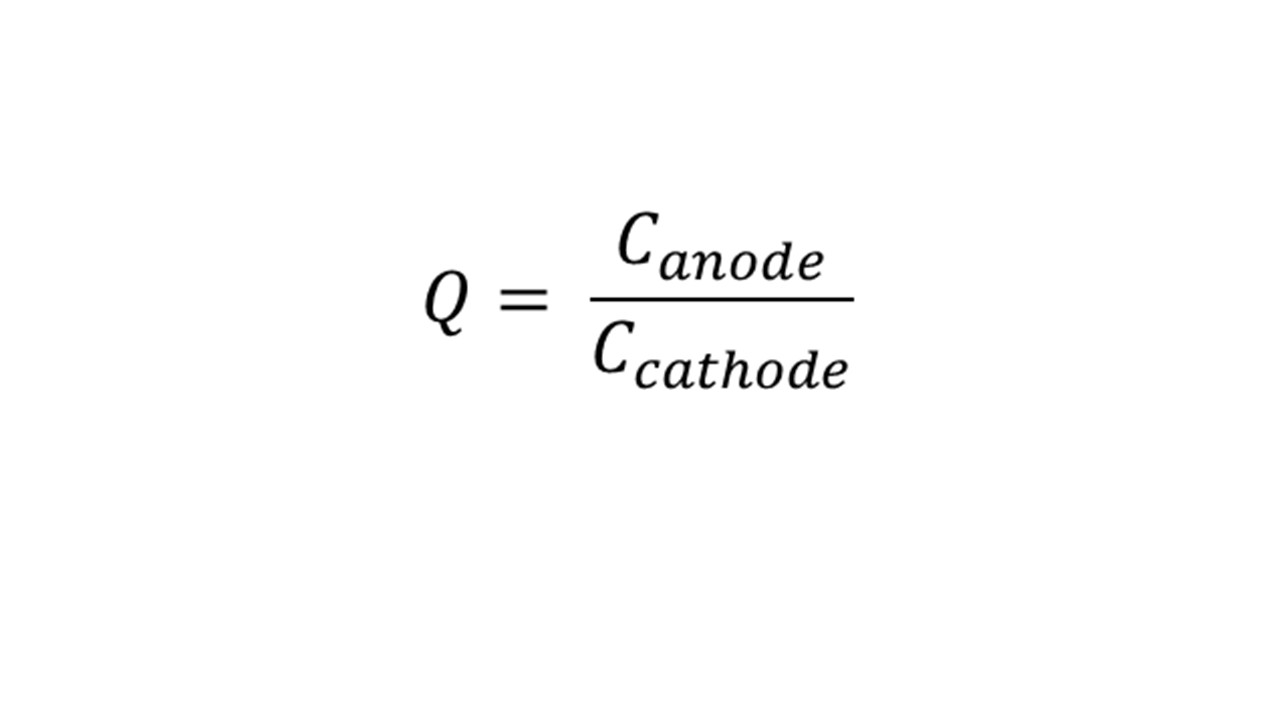
Figure 3: The definition of Q or concentration quotient
C = is , in case of EHC, hydrogen ion activity and can be expressed in Bar(g)
According to Nernst’s equation, EHC the following theoretical compression graph can be made
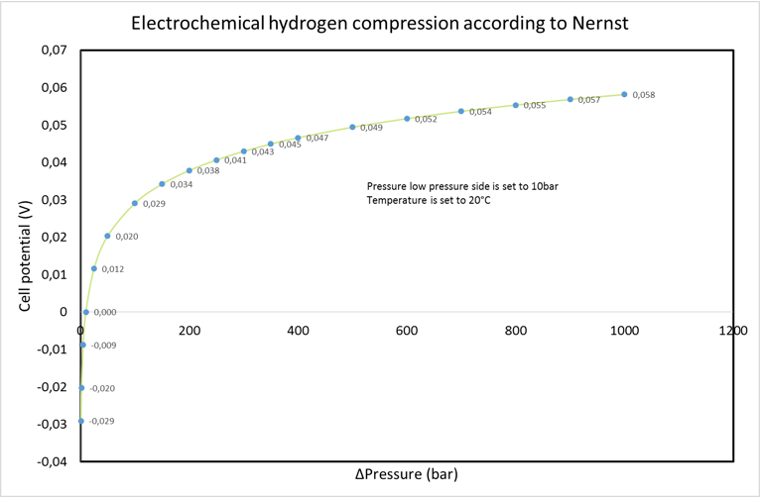
Figure 4: Theoretical voltages to be applied for hydrogen concentration difference according to Nernst
Now this is the theory behind the working principle, however there are several other phenomena going on which will be shortly described here.
Electro-osmotic drag
Back diffusion
iR drop
Dissolved hydrogen
These phenomena all have their influence on the efficiency of the EHC